Funky Tiger: A Heart-Filled Display Font for Makers
I was hunched over my desk, a fresh batch of soy candles cooling on the rack, and the blank label sheets were staring back at me. The fragrance was a perfect vanilla-bourbon blend, but the packaging needed to match the vibe—warm, a little cheeky, and undeniably romantic. That’s when I scrolled into my font library and landed on Funky Tiger. The moment I typed out the candle name, I saw those tiny hearts tucked inside each letter, and the whole design clicked into place. It felt like the font was made for moments like this.
If you’re a crafter, a printable creator, or a handmade seller, you know the power of a single typeface to transform a product from nice to unforgettable. Funky Tiger isn’t just another decorative font; it’s a mood-lifter. Its playful structure and hidden-in-plain-sight heart details give it a modern, romantic twist that feels both fresh and emotionally resonant. Whether you’re designing for a spring market launch or a Valentine’s Day collection, this font brings a tactile, handmade energy that digital tools sometimes strip away.
The Visual Personality Hidden in Every Letter
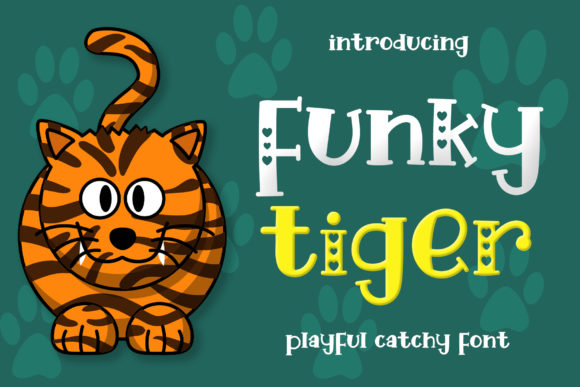
What strikes you first about Funky Tiger is its confident, chunky silhouette. The letters are bold and full of character, with organic curves that feel almost hand-drawn. But the real magic is in the details. Inside the counter of each letter—the enclosed space of an ‘a’, ‘b’, ‘d’, ‘g’, ‘o’, and others—rests a small, meticulously placed heart. It’s not a gimmick; it’s a subtle design choice that adds a layer of warmth without overwhelming the typography. This makes the font ideal for projects where you want to convey love, care, or a sense of whimsy.
The mood is contemporary yet approachable. It sidesteps the overly sweet feel of some script fonts and instead leans into a grounded, editorial playfulness. You can imagine it on a funky greeting card, sure, but it equally holds its own on a modern product label or a boutique shop sign. The texture and rhythm of the letterforms make it a true display font, perfect for titles, names, and short phrases that need to grab attention and hold it.
When a Font Becomes Your Packaging Partner
I started testing Funky Tiger on a candle label first. The font forced me to simplify the wording—instead of a long descriptive sentence, I used just the product name in a large, centered layout. The result was a label that felt curated and intentional. The hearts acted as tiny design elements, reducing the need for extra clip art or decorative borders. For small-batch makers, this is a huge win. You can print a sheet of labels at home, cut them out, and instantly have a polished, cohesive look.
Beyond candles, the font shines on boutique tags, soap packaging, and small-batch cosmetics. I mocked up a hang tag for a linen spray, and the bold letterforms were perfectly legible even when printed at a modest size on kraft paper. The ink held the details well, and the hearts didn’t fill in or become muddy—a common concern with intricate fonts on porous surfaces. If you’re designing for product packaging where the text needs to be readable from a shelf distance, Funky Tiger delivers that balance of impact and personality.
From Wedding Invitations to Greeting Card Profits
Stationery designers, take note. This font has a natural home in wedding suites, engagement party invitations, and save-the-date cards. The romantic undertone is obvious, but the modern weight keeps it from feeling dated or overly feminine. I paired it with a clean sans serif font for the body text on a wedding invitation mockup, and the contrast was stunning. The bride’s and groom’s names in Funky Tiger felt like a design feature in themselves, while the details remained crisp and easy to scan.
Greeting cards are another obvious playground. A birthday card with “Fabulous & Forty” set in this typeface immediately becomes a keepsake. The hearts add a celebratory touch without needing extra illustration. For printable sellers, this means you can create a single card design, list it as a digital download, and offer a product that looks completely custom. Since the font works well for short phrases, it’s a natural fit for card fronts, gift tag sentiments, and envelope liners. When you’re selling on Etsy or at craft fairs, that kind of visual distinctiveness helps your products stand out in a crowded market.
Digital Products That Feel Handmade
As a printable creator, I’m always chasing the illusion of texture and human touch in a digital file. Funky Tiger helps bridge that gap. When I added it to a set of motivational wall art prints, the lettering looked like it could have been stamped or painted, even though it was a clean vector output. The hearts embedded in the typeface gave the quotes a soft, encouraging vibe that a standard bold font would lack.
Planner pages and sticker sheets benefit similarly. For sticker designs, especially those destined for a cutting machine, you need fonts that are bold enough to weed easily but detailed enough to feel special. I test-cut a sheet of functional planner stickers with tiny tab labels like “Focus,” “Date Night,” and “Self-Care” set in Funky Tiger. The letters held their shape beautifully, and the hearts didn’t tear or become unrecognizable. For Cricut and Silhouette users, this is a crucial consideration. A font that cuts cleanly saves time, reduces material waste, and keeps your product looking professional.
Physical Merchandise and the Readability Factor
When you move from paper to physical products—tote bags, mugs, shirts, signs—the rules of typography shift. Funky Tiger is a display font by nature, which means it’s designed for short, impactful text rather than long paragraphs. This aligns perfectly with merchandise design. A tote bag with a single word like “Wander” or “Home” set in this font becomes an instant statement piece. The hearts add a communal, loving symbolism that works for family reunion shirts, couple’s retreat gifts, or even pet-themed merchandise.
I mocked up a small wooden sign for a farmhouse-style kitchen, and the font’s organic shape felt right at home against the rustic texture. The key is to control your size. At very small scales—below about 12 points in print—the heart details can begin to close up, especially on absorbent materials like uncoated wood or fabric. For most crafts, though, the sweet spot is a title or name at a display size where the quirky details can fully shine. When you’re designing listing images for your shop, displaying the product name in Funky Tiger on the mockup itself can create a cohesive brand preview that helps customers visualize the final item.
Pairing Funky Tiger for Balanced Design
No font is an island, and part of using Funky Tiger effectively is knowing how to pair it. Because of its bold personality, it thrives when supported by quieter, more functional typefaces. A clean sans serif font is the most reliable partner. The simplicity of a sans serif lets the playful hearts and curves of Funky Tiger take center stage without visual competition. I often use it for the main title and then set the product details, ingredients, or invitation details in a light, neutral sans serif.
For a more editorial or elegant feel, you can pair it with a simple serif font. The contrast between the structured serifs and the whimsical display letters creates a sophisticated tension that works well for wedding signage, boutique branding, and premium packaging. Avoid pairing it with another highly decorative font or a swirly script that might clash. The goal is to let the hearts breathe, not to overwhelm the viewer with competing flourishes. If you’re designing a complete brand identity, using Funky Tiger for your logo or main title and a consistent supporting font across all materials builds recognition and trust with your audience.
Technical Details and Licensing for Selling with Confidence
Before you pour your heart into a new product line, it’s essential to check the font’s technical specs and licensing. Funky Tiger is a premium font, and like most commercial typefaces, it comes with specific file formats and permissions. Look for the included styles, weights, and any special characters like alternates, ligatures, or swashes that can add variety to your designs. Some crafters overlook these hidden gems, but a single alternate letter can completely change the rhythm of a word.
File formats matter. For printable designs and digital mockups, you’ll want a format that works with your software—typically OTF or TTF files that install smoothly on both Mac and Windows. If you’re designing for cutting machines, confirm that the font imports correctly into your design software and that the character outlines are clean. Multilingual support is another factor, especially if you sell globally or serve a diverse customer base. A font that includes accented characters and extended Latin glyphs opens up more design possibilities.
Finally, and crucially, review the commercial font licensing terms. Most font licenses allow you to use the typeface on physical products for sale, like mugs, shirts, and cards, but there may be restrictions on digital products. If you plan to sell templates, printables, or SVG-style designs where the font is embedded, you may need an extended license. Always read the EULA or contact the font designer directly. Protecting your business starts with respecting the tool’s legal boundaries, and using a properly licensed font means you can sell your creations with peace of mind.
There’s a quiet confidence that comes from building a product around a typeface that just feels right. With Funky Tiger, that feeling comes from the way the letters settle into a design, bringing a little romance and a lot of personality to the literal surface of your work. Whether you’re printing a single wedding sign or a hundred sticker sheets, the font becomes part of the story you’re telling your customers. And that’s the kind of design choice that keeps your shop feeling fresh, season after season.